Thursday, July 29, 2010

ASIG Tells the Rest of IFE Story

Welcome to Wired!

A recurring news story is the investment major airlines are making to upgrade the cabin amenities in their fleets. This CBS News report shows the benefits of power supplies for passenger electronic devices and seat-back in-flight entertainment screens. But like most such news stories, it ignores regional carriers and operators of smaller aircraft who are providing similar amenities to their  passengers with ASIG’s EmPower supplies and OnBoard IFE system.

The reporter notes that the seatback IFE system allows parents to control what their children see during the flight. With the OnBoard system, passengers need not invest the time to learn and input the parental settings in the seatback system because they  enjoy the IFE options on their personal electronic device, which is already configured to their particular needs.

For the rest of the story, see OnBoard Server is IFE Buffet, Major Amenities for Regional Cabins, and contact ASIG.

Until next time, stay 5x5, mission ready, and Wired!

Thursday, July 22, 2010

Log-In to VESSA™ for Cost-Efficient Engineering

Welcome to Wired!

Optimizing productivity and controlling cost is important in any economy. Machines—and the people who operate, maintain, and keep them current—must be engaged in  productive effort most of the time. Make work need not apply.

VESSA-FULLIn aviation, some efforts are periodic or unpredictable, and staffing for them is contrary to efficiency’s goals. To satisfy an operator’s needs when they arise,  enterprising companies have developed cost- efficient solutions that go by many names, power-by-the-hour,  NetJets—and VESSA™, aka ASIG’s Virtual Engineering Services Subscription Agreement.

With almost every aspect of certification and airworthiness hinging on approved data, engineers are essential members of the aviation team, says Luke Ribich, ASIG’s Managing Director. When an unexpected workload or large project stretches the limits of the subscriber’s staff, VESSA™ provides immediate relief by allowing the subscriber to tap into ASIG’s full service engineering and certification expertise for as long as is necessary to eliminate the engineering overload and return to business as normal.

Launched in 2007, VESSA™ has served nearly 30 subscribers to date, each with a dedicated portal available from any computer with Internet access. ASIG maintains the servers—and security—which meets the requirements of an especially picky subscriber, the Department of Defense.

RolloverMom A typical subscription runs three years, and companies can adjust their  engineering requirements up or down annually. ASIG also offers “an AT&T provision,” Ribich says, referring to the  TV commercial where the mother admonishes her son for discarding his rollover minutes. “In other words, the engineering effort unused in any given month carries forward…so if you have a month that runs over, you’re not losing anything.”

Cash flow forecasting is another VESSA™ strong suit. If subscribers have an upcoming “program, like the CNS/ATM requirements coming down from NextGen, they can amortize the cost over the  year,” Ribich says. “Likewise, if their fleet changes or they need to reduce costs for some reason, they can make those adjustments at the end of each 12 months.”

Engineering is document intensive, so VESSA™ is an online library that enables subscribers to quickly find and use them, printing hardcopies as needed. Subscriber-provided  documents, from tech orders and diagrams to illustrated catalogs and ICA, are determined when setting up the subscription or project, and ASIG can digitize anything not already in electronic form.

VESSA PORTALSubscribers initiate projects by uploading the scope of work, and the system captures all online collaboration with ASIG’s engineers. Other pages present the project’s Gantt charts, milestones, any required photos and video, contact information for everyone on the project, links to viewers needed to examine data files and drawings, invoicing, a weekly status report, the engineering help desk, and many more features.

VESSA™ also works well with first-article and proof-of-concept manufacturing, Ribich says. And it’s all on-call, 24/7/365. Being online, its on-demand operation enhances efficiency. If a last-minute schedule change prevents a subscriber from reviewing a document for approval or changes, the task—not a roomful of people—waits for him without complaint—or loss of productivity.

Until next time, stay 5x5, mission ready, and Wired!

Tuesday, July 6, 2010

EWIS, EZAP & ICA: What’s It All Mean?

Welcome to Wired!

Two new acronyms have recently joined the aviation lexicon, EWIS (electrical wiring interconnection system) and EZAP (enhanced zonal analysis program). Both are intimately related to ICA (instructions for continued airworthiness).

EWIS was conceived on July 17, 1996, when TWA Flight 800 fell into the Atlantic 12 minutes after its New York departure. During its four-year investigation the NTSB never found what ignited the 747’s center wing tank,  but it did find a number of potentially unsafe conditions nearby, including cracked insulation, open-ended  splices vulnerable to moisture, and other repairs that didn’t comply with Boeing’s Standard Wiring Practices Manual.
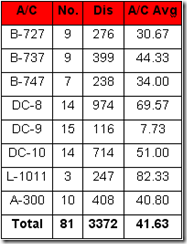
AC Insp This discovery led to the FAA’s Aging Transport Systems Rulemaking Advisory Committee (ATSRAC). Composed of airlines, OEMs, and regulators, it inspected 81 aircraft, finding 3,372 discrepancies. They ranged from deteriorated wiring, corrosion, improper installation and repairs to contamination by metal shavings, dust, and flammable fluids.

The arcing IFE cables that likely brought down Swissair Flight 111 on September 9, 1998 reinforced the ATSRAC mission. After the Lear 35 carrying golfer Payne Stewart crashed in 1999, the NTSB urged the ATSRAC to look at all transport category aircraft. While the NTSB found no specific cause for the loss of pressurization, the system is controlled electrically.

Until this time, wiring rarely received any special maintenance or inspections, even though its failure causes delays, unscheduled landings, IFE system problems, and both nonfatal and deadly accidents. The ATSRAC recommended internationally harmonized certification requirements, standard wiring practices, and maintenance procedures to correct and prevent these consequences.

These recommendations led to NPRM 05-08, Enhanced Airworthiness Program for Airplane Systems/Fuel Tank Safety. Published on October 6, 2005, it christened EWIS and, for the first time, officially defined the electrical system and gave it a home, Subpart H of Part 25. The point is that safety depends on the reliable transfer of electrical energy, and that EWIS is equal to the critical systems it connects and controls.

Officially, EWIS is “any wire, wiring device, or combination of these, including termination devices, installed in any area of the airplane for the purpose of transmitting electrical energy, including data and signals, between two or more intended termination points…. This includes electrical cables, coaxial cables, ribbon cables, power feeders, and databuses.” Don’t think wires, think wiring diagram. EWIS covers everything a mechanic can maintain, repair, or modify.

The final rule (dated December 2007, with compliance starting 39 months later) bred dozens of advisory circulars. AC 25,17001-1, Certification of Electrical Wiring Interconnection Systems on Transport Category Airplanes, guides the creation of the original system and its modification by companies like ASIG. A third of its guidance pages is dedicated to the qualitative and quantitative safety assessment and analysis required for original and  supplemental type certification.

wireties-3  AC 25.27-A, Development of Transport Category Airplane Electrical Wiring Interconnection Systems Instructions for Continued Airworthiness Using an Enhanced Zonal Analysis Procedure, is the everyday bible. OEMs add EWIS (including electrical load data) to the ICA for an as-delivered configuration. Subsequent modifications, like ASIG’s OnBoard IFE server, must seamlessly integrate their ICA with the OEM’s.

Operators incorporate the new instructions with an EZAP, which determines the appropriate inspection and cleaning procedures. Simply put, mechanics evaluate EWIS’s condition and the affect of nearby items, such as plumbing or control cables, to its safety. An EZAP is a logical addition to aircraft covered by a zonal inspection program. On non-ZIP aircraft the EZAP will identify EWIS-related tasks that must be consolidated in the inspection and maintenance programs. (Those who hold the design approval for these aircraft may find it worthwhile to create a ZIP in conjunction with an EZAP).

Ultimately, OEMs, STC holders, aircraft operators, repair stations, and anyone who provides maintenance need to evaluate their overall philosophy and specific maintenance tasks so that EWIS receives the same care and attention as any other system critical to aircraft operation.

Until next time, stay 5x5, mission ready, and Wired!

Thursday, July 1, 2010

Airlines Upgrading Cabin Amenities

Welcome to Wired!

A recent Wall Street Journal article and video reported that a number of major US carriers are upgrading their coach cabin amenities with “better entertainment systems, Wi-Fi access, [and] more electrical outlets.”

American Airlines, as the article and video show, is upgrading its Boeing 737 fleet, replacing the old IFE system with flat-panel LCDs, power plugs, and Wi-Fi. Continental is adding power plugs to some of its aircraft, Delta is putting video on its international fleet, and United is adding video and power plugs to many of its Boeing 777s.

ASIG can help you keep pace with its OnBoard IFE server (See OnBoard Server is IFE Buffet for Passenger PEDs) and EmPower passenger PED power supplies (See Major Amenities for Regional Cabins).

Until next time, stay 5x5, mission ready, and Wired!

Wednesday, June 23, 2010

OnBoard Server is IFE Buffet for Passenger Personal Electronic Devices

Welcome to Wired!

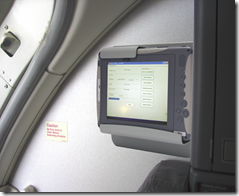
image Actually talking to someone is rarely at the top of the list of things people do with their smartphones, at least that’s the impression given by Pew Research Center studies. Adding tablets like the iPad, netbooks, and old school laptop computers to the mix of personal electronic devices (PEDs) people use to connect with the wired world, ASIG realized that most airline passengers today fly with the display half of an in-flight entertainment (IFE) system. It only seemed right to meet passengers halfway and install its OnBoard IFE server and access terminal in the launch customer’s Boeing 737 NG.

Traditional IFE systems, with screens wired into the back of every seat, are heavy, expensive, and impractical on many smaller single-aisle jets. And keeping pace with technology is an expensive decision because the server that feeds the seatback displays is permanently installed.

Powered by Avionica equipment, the OnBoard server/access terminal is based on tablet computer technology and size (10.5-by-7.2-by-1.65-inches). Easily removable, it is securely mounted in a lockable dock. Combined, the server and mount weigh just 9 pounds, and keeping pace with new technology is simply a matter of remotely and wirelessly pushing content updates or plugging a freshly updated server into the dock.

Part of ASIG’s Wired Aircraft architecture, OnBoard distributes its IFE content through a secure Wi-Fi router. To connect with the outside world, ASIG can configure it with the appropriate Iridium gateway and/or satellite communication system. OnBoard’s solid-state drive holds up to 800 hours of content, from streaming video to web hosting of online catalogs. With the Iridium gateway it will handle point of sale applications with real-time credit card clearing and text messaging. With satcom, OnBoard gives passengers text e-mail and SMS service.

image OnBoard can also reduce the time and money it takes to keep an aircraft mission ready by storing all the necessary manuals, databases, LRU operating software, and code images, making them immediately available to technicians. In conjunction with the backend server based avSYNC software, OnBoard uses its wireless routers to keep its IFE and maintenance content current.

Maintenance technicians can remove the server from its locked mount and take it to where they are working. In addition to a variety of digital documents and databases, OnBoard can deliver a number of support applications, including ARINC 615, ARINC 615A dataloading, ARINC 429 databus analysis, TCAS diagnostics, DFDR download, flight data analysis, and many more.

OnBoard’s new menu software enables operators to build custom prompts and workflows, from one-touch operation to detailed data entry. Combined with the system’s scalability, you can design the system best suited to your passenger’s needs and your bottom line.

OnBoard is the third and final phase of ASIG’s Regional Aircraft Cabin Improvement Program. An April 2010 STC marked the completion of Phase II, which provides external power for passenger personal electronic devices (See Major Amenities for Regional Cabins). Phase I, STC’d in January 2010, brought eight-meal TIA convection ovens to the EMB-145.

Combining an OnBoard IFE server and access terminal with ASIG’s external power supply system to the passengers’ personal electronic devices operating at full capacity will go more than halfway in making their flight productive and entertaining.

Until next time, stay 5x5, mission ready, and Wired!

Monday, June 21, 2010

Building Unique, Flexible STC Solutions

Welcome to Wired!

When bidding upgrades, most operators of transport-category aircraft look at deliverables and want to know the cost of four things: nonrecurring engineering, equipment, the kits that unite equipment and  airframe, and time and money it takes to consummate that union.

b727_09The answers to these questions define a  start-to-finish journey in four giant leaps, the categorical summation of the step-by-step route ASIG takes from the operator’s statement of work to installing the inaugural upgrade kit and shepherding it through certification. Optimized for efficiency and flexibility, each route is unique to the upgrade destination.

Each STC project has a unique list of documents that gives the FAA the data it needs for certification, says Managing Director Luke Ribich. ASIG builds a proprietary datalist with an application that compiles the necessary certification, manufacturing, and installation documents. Related applications compute the time and labor involved for each step, enabling ASIG to quickly answer the four main questions.

A full communication and navigation upgrade is a good example, says Ribich, because it has an involved document list, including the analysis of electrical load and system safety to weight and balance supplements. If the STC covers different aircraft, as an  all-model list (AML) would, an aircraft similarity report itemizes the applicable equipment. “More modern aircraft have a common nav pack or data bus,” but  classics like the Boeing 727-300 often have different electro-mechanical suites, depending on the initial operator. “That means more wire, different switches, and different boxes.”

A Service-Disabled Veteran-Owned Small Business (SDVOSB), ASIG assigns a highly experienced and proficient team of five to eight key employees to the prerequisite work that answers an operator’s four questions. They are the same people who make the plan happen once the deal is signed. An addendum to that agreement covers the kits, Ribich says, “because we can’t  price them until the engineering is done and the bill of materials is fully developed and bid out.”

ASIG always does the inaugural kit installation because it and any applicable ground and flight tests are part of FAA certification, which “goes extremely smooth when it’s a front to back, closed-loop program” handled by the same team. Once the STC is approved, ASIG drop ships kits to the operator.

ASIG will do phased installations, running cables and wiring on the first pass, and “ripping out the old hardware and dropping in the new on the second evolution,” Ribich says. ASIG will also work where the operator wants.

DC8_EFIS One of ASIG’s early projects proves this point and illustrates  its capabilities.  With  engineering liaisons and mechanics, a 22-person team turned a French Air Force DC-8-72 with a five-man cockpit  into an US-registered aircraft with with a three-man cockpit filled with 21st century systems. 

The to-do list was long: demilitarize the NATO equipment, install and certify a Universal EFIS with dual FMS, TAWS, and triple redundant RVSM digital air data system, as well as a cockpit voice and digital flight data recorders. “What made the project unique was the 10 pallet positions aft of the cockpit, followed by a 32-passenger combi section,” Ribich says. “A specialized flight director gave us some problems initially, but we designed and built a converter box that solved them.”

In a hangar the operator rented for the work, just big enough for the DC-8’s nose, the ASIG team brought everything it needed to install the new systems. Starting from scratch with a contract signed October 2005. all engineering was done the same day installations started, December 18. “We worked through Christmas Eve, were off through New Year’s Day, and completed all the work on March 28. The FAA issued the STC on March 12.”

Everyone at ASIG comes from the Part-121 world, Ribich says, “so we know it is a fast-paced environment that requires efficiency and flexible solutions.”

Until next time, stay 5x5, mission ready, and Wired!

Thursday, June 17, 2010

And the RAA Winners Are…

Welcome to Wired!

ASIG exhibited at its inaugural Regional Airline Association (RAA) Annual Convention in Milwaukee. All registered attendees (roughly 1,500) were automatically entered in our drawing, as were those who stopped by the booth, and it was good talking with all of you. Without further adieu, the winners are…

Grand Prize - Tom Tom Go 730 GPS

Tom Haarmann

Customer Service Manager—GoJet Airlines

Dry-weave Moisture Wicking Sport Shirt

Gwendolyn Bentley 

Purchasing Manager—Republic Airlines

John Cross

Director of Materials –Colgan Air

Joe Grogan

Director of IEP—Pinnacle Airlines

Rich Rupslauskas 

Technical Services—Air Wisconsin

Ron Charles

Senior Director, DIA—Frontier Airlines

Terry Basham

Vice President, Customer Service—Trans States Holdings

Port Authority Moisture Wicking Golf Visor

Todd Hargrove

HazMat Senior Specialist--Southwest Airlines Company

Jimmy Owenby

Station Manager—SkyWest Airlines

Joe Williamson

Diversified Communications Group

Mike Lohmann

Training & Standards Director—Jazz Airlines

Randy E. Tweed

Chief Inspector—Commutair

June Donovan

Security Manager—JetBlue Airlines

Cindy Grzyb

General Manager—Continental Airlines

Thomas Reynolds

GM, Maintenance Operations—Atlantic Southeast Airlines

Lo Lyons

In-Flight Training Manager—ExpressJet Airlines

Until next time, stay 5x5, mission ready, and Wired!